
Start with the affected compartment
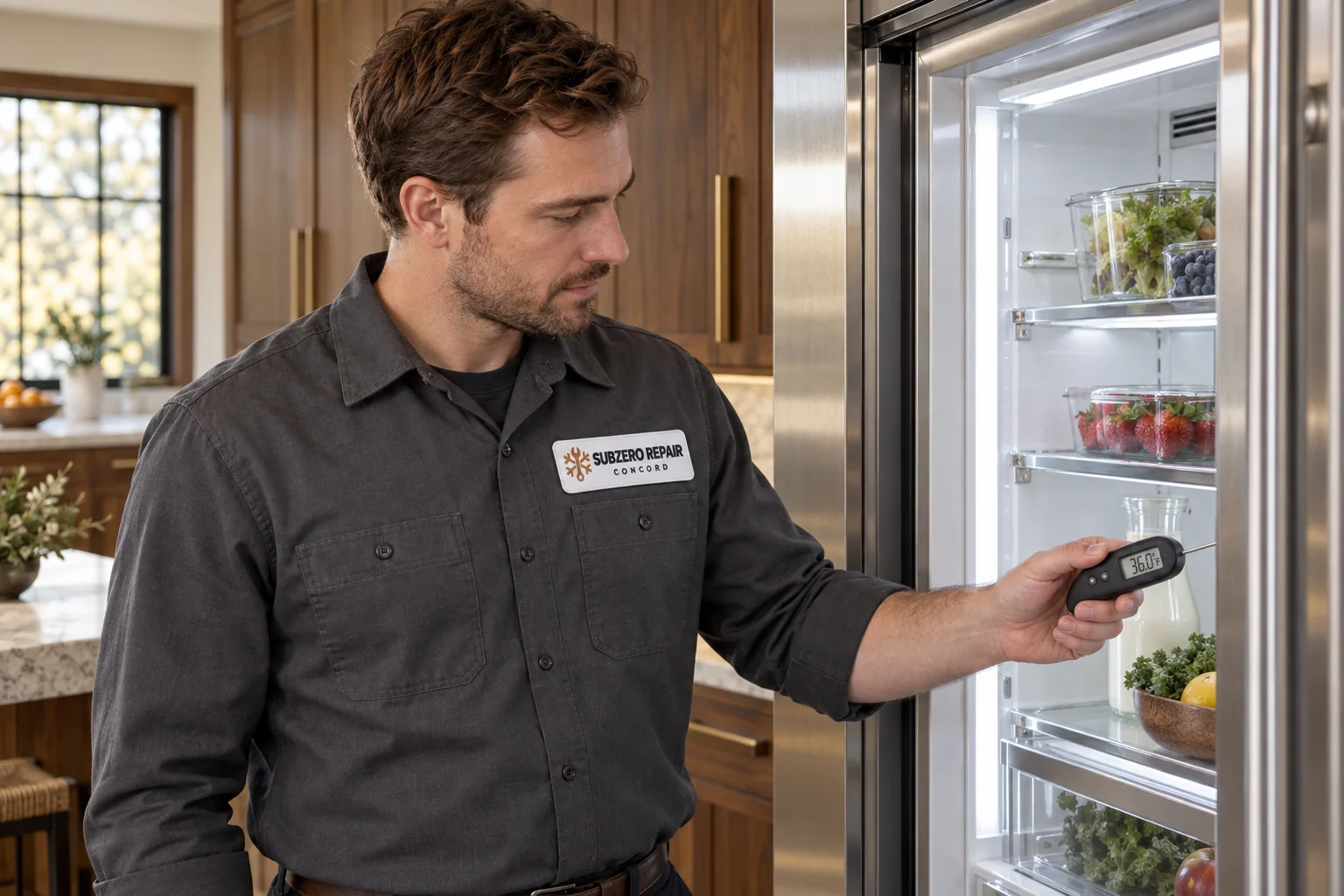
Check what you can observe without taking the appliance apart. Is the refrigerator section warm while the freezer appears normal? Are both sections affected? Does a temperature alarm appear? Write down the displayed setting and any independently measured temperature, keeping those two values separate.
A control display may show a selected setting rather than the actual temperature of every item inside. The technician will interpret measurements alongside the model, operating conditions and symptom history.
Describe the pattern, not a guessed part
Note whether the change followed a door left open, a power interruption, cabinet work or a gradual decline in performance. Describe unusual sounds and where condensation or frost appears. A brief recording is useful if the sound comes and goes.
A cooling complaint does not establish that the compressor needs replacement. Door closure, airflow, sensing, controls and the refrigeration system need to be considered in the context of the appliance design.
Prepare for the assessment
Arrange suitable storage for perishables if cooling is unreliable. Keep the doors closed as much as practical and avoid repeated changes to settings that make the history difficult to follow. Leave the built-in unit in its enclosure.
Have the model number, affected compartment and any alarm ready when calling. Clear space in front of the appliance so the doors can open fully. Tell us about custom panels or restricted access before the visit.