
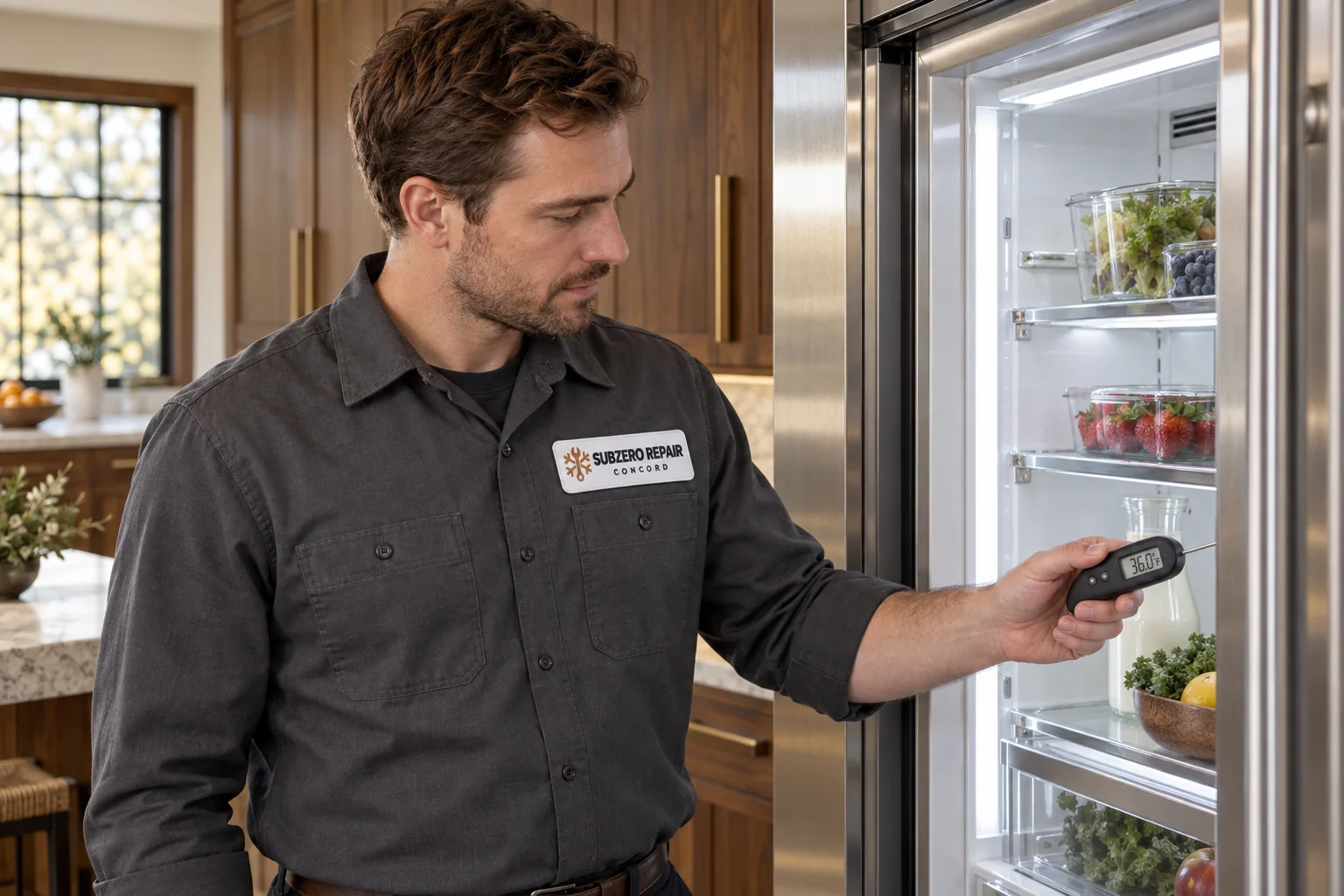
Photograph where the frost appears
Capture the area around the door, affected drawers and visible interior surfaces. Note whether frost is concentrated at one point or spread throughout the compartment. Include when you first noticed it and how quickly it returns.
Keep packaging clear of the door opening. A visible obstruction can prevent a seal from meeting correctly, while a door or drawer that no longer aligns needs assessment. Do not force it shut.
Record cooling and door behavior separately
Tell us whether frozen food remains firm, whether an alarm appears and whether the door closes normally. A cabinet can develop frost and still appear to freeze; that does not establish why moisture is entering or where ice is accumulating.
Air leakage, defrost operation and airflow are among the conditions considered during diagnosis. The design of the freezer determines which checks are relevant, so a model number matters more than the cabinet’s exterior finish.
Avoid damaging the liner while waiting
Do not chip ice with a knife or use a heat gun. Leave concealed panels in place. If the manufacturer’s manual recommends defrosting for your model, record the original frost pattern first and follow the model-specific instructions.
When cooling is unreliable, move affected food to suitable storage. During scheduling, explain whether the freezer is a separate column or part of a refrigerator and whether an ice maker is also affected.